News

New research on how life began, and what we take from each paper

The latest papers and the landmark ones, each in a sentence, in plain words or in full detail. 27 of the 36 feed a test we have planned. Every source was checked against its DOI.

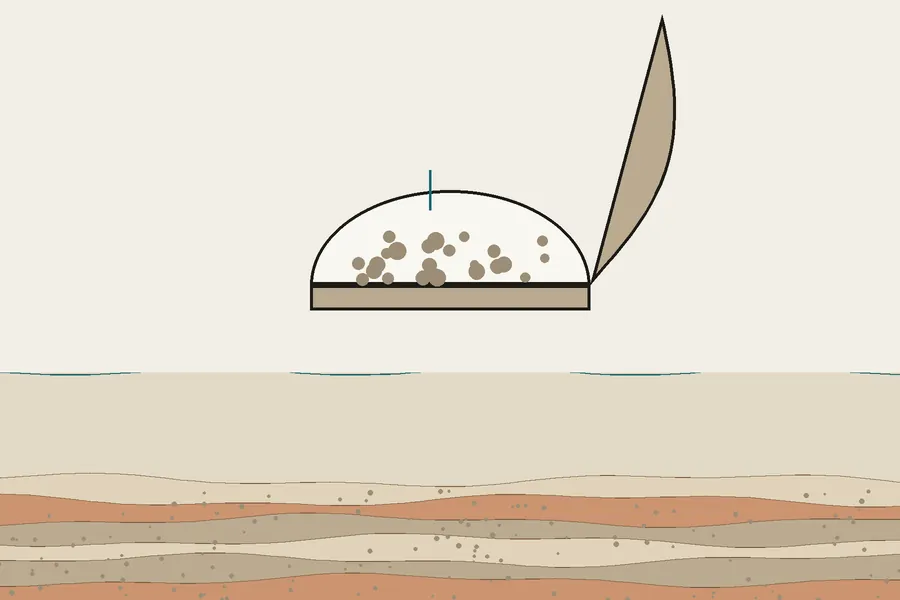
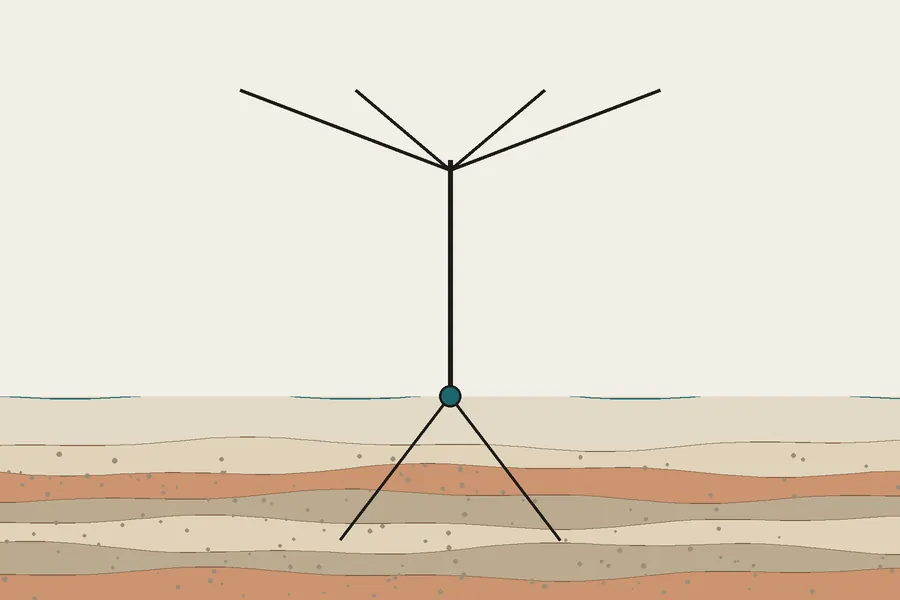
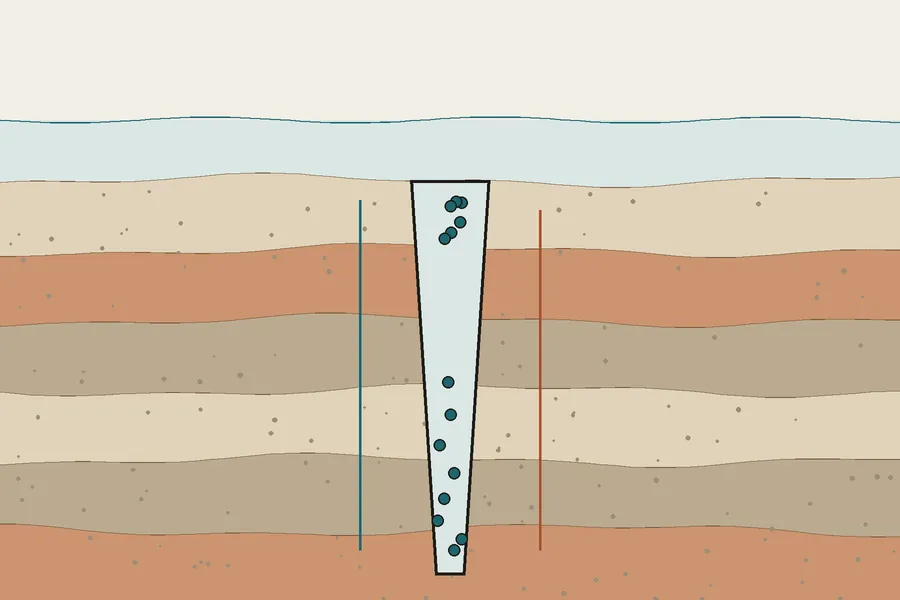
Pictures are illustrations drawn for this site, not figures from the papers.

00The field now

The field now: who is working on what

Roughly 4,100 researchers published journal papers on how life began in the past year, across these 10 directions.

Past 12 months, updated 19 November 2026. Bars show distinct authors; lines show papers per year (the dashed end is this year so far). These are estimates from keyword matches, not a census.

How we counted

Counts are estimates from keyword matches in OpenAlex titles and abstracts, journal articles and reviews only, for the 12 months to the update date. A paper can match more than one direction, and the headline removes people counted twice. Distinct authors and institutions are exact up to 400 papers per direction and extrapolated from the newest 400 above that. Each direction lists its exact query so anyone can check it.

  1. 1Prebiotic chemistry

    Find plausible reactions on the early Earth that make life's building blocks: nucleotides, amino acids, lipids.

    ~1,100 authors · ~240 papers · ~480 institutions

    Papers per year: 2021: 171, 2022: 187, 2023: 202, 2024: 212, 2025: 217, 2026: 218 (2026 is the year so far)20212026

    rising+6% a year, 2021–2025

    Leading groupsJoseph Moran (University of Strasbourg) · Matthew W. Powner (University College London) · John D. Sutherland (MRC Laboratory of Molecular Biology) · Dieter Braun (LMU Munich) · David C. Catling (University of Washington)

    NowCyanosulfidic chemistry keeps adding steps, such as phosphate activation and protecting groups. Wet-dry and heat-flow setups test where those steps could run. Read: Marinic 2026, Liu 2026, Capera-Aragones 2026.

    UsOur pathway map found no route that stays continuous under our sealed step-compatibility rule.

    Query

    ("prebiotic chemistry" OR "prebiotic synthesis" OR "prebiotically plausible" OR "prebiotic conditions" OR "origin of life" OR "origins of life") AND (synthesis OR reaction OR nucleotide OR "amino acid" OR peptide OR phosphorylation)

    Filter: type:article|review,primary_location.source.type:journal, published 2025-11-20 to 2026-11-19. Check the count on OpenAlex (the meta.count field).

  2. 2Organics from space

    Asteroid samples (Bennu, Ryugu) and meteorites show which building blocks space delivered to the young Earth.

    ~960 authors · ~160 papers · ~400 institutions

    Papers per year: 2021: 104, 2022: 118, 2023: 114, 2024: 123, 2025: 120, 2026: 151 (2026 is the year so far)20212026

    steady+3% a year, 2021–2025

    Leading groupsHiroshi Naraoka (Kyushu University) · Yuichi Tsuda (ISAS, JAXA) · Tomohiro Usui (ISAS, JAXA) · Dante S. Lauretta (University of Arizona) · Yoshihiro Furukawa (Tohoku University)

    NowSamples returned from Ryugu and Bennu now show all five nucleobases, sugars, ammonia and brines, and comets look less likely as a source of cyanide. Large mission teams inflate the author count here. Read: Koga 2026, Furukawa 2025, Anslow 2026.

    Query

    (Bennu OR Ryugu OR "carbonaceous chondrite" OR "carbonaceous chondrites" OR meteorite OR meteorites OR cometary) AND ("amino acids" OR nucleobases OR organics OR "organic matter" OR prebiotic)

    Filter: type:article|review,primary_location.source.type:journal, published 2025-11-20 to 2026-11-19. Check the count on OpenAlex (the meta.count field).

  3. 3Origins and life detection beyond Earth

    Origin-of-life theory guides where to look for life elsewhere and how to tell it from chemistry.

    ~960 authors · ~150 papers · ~380 institutions

    Papers per year: 2021: 62, 2022: 77, 2023: 94, 2024: 82, 2025: 125, 2026: 130 (2026 is the year so far)20212026

    rising+16% a year, 2021–2025

    Leading groupsTyler D. Robinson (University of Arizona) · Renyu Hu (Caltech) · Kathryn M. Stack (Jet Propulsion Laboratory) · Tanja Bosak (MIT) · Felipe Gómez (Centro de Astrobiología) · Elisabeth M. Hausrath (University of Nevada, Las Vegas)

    NowThe claim of sulfur gases on K2-18 b drew rebuttals, and Mars rover teams report organic-mineral pairings at Jezero. Others are defining the abiotic background that a sign of life has to beat. Read: Luque 2025, Davila 2026, Barge 2026.

    Query

    (astrobiology OR biosignature OR biosignatures OR "life detection" OR "agnostic biosignature") AND ("origin of life" OR "origins of life" OR abiogenesis OR prebiotic OR habitability)

    Filter: type:article|review,primary_location.source.type:journal, published 2025-11-20 to 2026-11-19. Check the count on OpenAlex (the meta.count field).

  4. 4Protocells and compartments

    Early life needed a container: fatty-acid vesicles or droplets that grow, divide and keep their contents together.

    ~620 authors · ~160 papers · ~260 institutions

    Papers per year: 2021: 102, 2022: 99, 2023: 121, 2024: 134, 2025: 134, 2026: 150 (2026 is the year so far)20212026

    rising+9% a year, 2021–2025

    Leading groupsYan Qiao (Chinese Academy of Sciences) · Stephen Mann (University of Bristol) · Evan Spruijt (Radboud University) · Job Boekhoven (Technical University of Munich) · Neal K. Devaraj (UC San Diego)

    NowTopics include protocells that form from scratch, vesicles that grow with peptides, and protocells that mimic the shapes of early microfossils. Read: Khanal 2026, Baba 2026, Gillet 2026.

    Query

    (protocell OR protocells OR coacervate OR coacervates OR "fatty acid vesicles" OR "prebiotic compartments" OR "minimal cell") AND ("origin of life" OR "origins of life" OR prebiotic OR protocell)

    Filter: type:article|review,primary_location.source.type:journal, published 2025-11-20 to 2026-11-19. Check the count on OpenAlex (the meta.count field).

  5. 5Eukaryogenesis and Asgard archaea

    Complex cells arose when an Asgard-like archaeon took in a bacterium; the Asgard genomes show how.

    ~400 authors · ~80 papers · ~220 institutions

    Papers per year: 2021: 57, 2022: 88, 2023: 50, 2024: 59, 2025: 78, 2026: 66 (2026 is the year so far)20212026

    steady+2% a year, 2021–2025

    Leading groupsThijs J. G. Ettema (Wageningen University) · Anja Spang (NIOZ) · Tom A. Williams (University of Bristol) · Brett J. Baker (University of Texas at Austin) · Laura Eme (Université Paris-Saclay) · Eugene V. Koonin (NCBI, National Library of Medicine)

    NowGenomics of Asgard archaea keeps finding prokaryotic roots for proteins once thought to be unique to eukaryotes. Read: Liu 2026, Souza 2026.

    Query

    "Asgard archaea" OR Asgardarchaeota OR eukaryogenesis OR "origin of eukaryotes" OR "origin of the eukaryotic cell" OR "first eukaryotic common ancestor" OR "last eukaryotic common ancestor"

    Filter: type:article|review,primary_location.source.type:journal, published 2025-11-20 to 2026-11-19. Check the count on OpenAlex (the meta.count field).

  6. 6Molecular dating and the earliest record

    Put dates on the tree with molecular clocks calibrated by fossils and geochemical traces of the earliest life.

    ~280 authors · ~50 papers · ~190 institutions

    Papers per year: 2021: 48, 2022: 51, 2023: 43, 2024: 61, 2025: 50, 2026: 44 (2026 is the year so far)20212026

    steady+3% a year, 2021–2025

    Leading groupsPhilip C. J. Donoghue (University of Bristol) · Martin J. Van Kranendonk (UNSW Sydney) · Shuhai Xiao (Virginia Tech) · Emmanuelle J. Javaux (University of Liège) · Eva E. Stüeken (University of St Andrews) · Betül Kaçar (University of Wisconsin–Madison)

    NowMolecular clocks for early life are being recalibrated against the rock record, and how fossil calibrations are chosen is under scrutiny. Read: Davín 2025, Álvarez-Carretero 2026, Davies 2026.

    UsOur LUCA calibration study measures how far the dates move with calibration choices.

    Query

    ("molecular clock" OR "molecular dating" OR "divergence time" OR microfossil OR microfossils OR stromatolite OR stromatolites OR "earliest life" OR "early life") AND (Archean OR Archaean OR Hadean OR Precambrian OR Paleoproterozoic OR "early Earth")

    Filter: type:article|review,primary_location.source.type:journal, published 2025-11-20 to 2026-11-19. Check the count on OpenAlex (the meta.count field).

  7. 7Metabolism first and hydrothermal settings

    Life began as self-sustaining chemistry driven by energy gradients in vents or hot springs; genes came later.

    ~280 authors · ~60 papers · ~160 institutions

    Papers per year: 2021: 45, 2022: 27, 2023: 36, 2024: 40, 2025: 36, 2026: 54 (2026 is the year so far)20212026

    steady-0% a year, 2021–2025

    Leading groupsHarun Tüysüz (Max Planck Institute for Coal Research) · William F. Martin (Heinrich Heine University Düsseldorf) · Martin J. Van Kranendonk (UNSW Sydney) · Laura M. Barge (Jet Propulsion Laboratory) · Matthew A. Pasek (University of South Florida)

    NowMetal catalysts are driving phosphorylation and CO2 reduction under vent-like conditions, while others say the classic alkaline-vent picture needs rethinking. Read: Schlikker 2026, Martin 2026, Tutolo 2026.

    Query

    ("hydrothermal vent" OR "hydrothermal vents" OR "alkaline vent" OR "hot spring" OR "metabolism-first" OR protometabolism OR "prebiotic metabolism" OR "geochemical") AND ("origin of life" OR "origins of life" OR prebiotic OR abiogenesis)

    Filter: type:article|review,primary_location.source.type:journal, published 2025-11-20 to 2026-11-19. Check the count on OpenAlex (the meta.count field).

  8. 8Theory: autocatalysis, assembly and information

    General laws for how chemistry becomes life: autocatalytic networks, assembly theory, selection before genes.

    ~270 authors · ~50 papers · ~160 institutions

    Papers per year: 2021: 39, 2022: 29, 2023: 47, 2024: 31, 2025: 47, 2026: 49 (2026 is the year so far)20212026

    steady+4% a year, 2021–2025

    Leading groupsMoran Frenkel-Pinter (Hebrew University of Jerusalem) · Loren Dean Williams (Georgia Institute of Technology) · Cole Mathis (Arizona State University) · Ken Takai (JAMSTEC) · Yufen Zhao (Ningbo University)

    NowAssembly theory is under heavy fire: critics say it reduces to compression. Autocatalytic-set theory is being tied to real chemistry. Read: Ozelim 2026, Cronin 2026, Golnik 2026.

    Query

    ("autocatalytic set" OR "autocatalytic sets" OR "autocatalytic network" OR "autocatalytic networks" OR "assembly theory" OR "assembly index" OR "chemical evolution") AND ("origin of life" OR "origins of life" OR abiogenesis OR prebiotic)

    Filter: type:article|review,primary_location.source.type:journal, published 2025-11-20 to 2026-11-19. Check the count on OpenAlex (the meta.count field).

  9. 9RNA world and self-copying molecules

    Life started with RNA that both carried information and copied itself, before proteins and DNA.

    ~200 authors · ~60 papers · ~110 institutions

    Papers per year: 2021: 55, 2022: 61, 2023: 47, 2024: 61, 2025: 54, 2026: 57 (2026 is the year so far)20212026

    steady-0% a year, 2021–2025

    Leading groupsJack W. Szostak (Howard Hughes Medical Institute) · Philipp Holliger (MRC Laboratory of Molecular Biology) · Gerald F. Joyce (Salk Institute) · Irene A. Chen (UCLA) · Dieter Braun (LMU Munich)

    NowA small polymerase ribozyme that can make itself and its complementary strand (2026), and more accurate polymerases, bring self-copying RNA closer. Read: Gianni 2026, Horning 2026, Essex 2026.

    UsOur QT45 check found net replication far below one copy per cycle, and epistasis did not predict contacts.

    Query

    "RNA world" OR "polymerase ribozyme" OR "nonenzymatic replication" OR "non-enzymatic replication" OR "nonenzymatic primer extension" OR "non-enzymatic primer extension" OR "nonenzymatic RNA copying" OR "non-enzymatic RNA copying" OR "ribozyme evolution"

    Filter: type:article|review,primary_location.source.type:journal, published 2025-11-20 to 2026-11-19. Check the count on OpenAlex (the meta.count field).

  10. 10LUCA and the deep tree of life

    Rebuild the last universal common ancestor from the genes all living things share, and place the root of the tree.

    ~190 authors · ~50 papers · ~130 institutions

    Papers per year: 2021: 48, 2022: 36, 2023: 38, 2024: 42, 2025: 40, 2026: 42 (2026 is the year so far)20212026

    steady-2% a year, 2021–2025

    Leading groupsTom A. Williams (University of Bristol) · Philip C. J. Donoghue (University of Bristol) · Anja Spang (NIOZ) · William F. Martin (Heinrich Heine University Düsseldorf) · Eva E. Stüeken (University of St Andrews)

    NowThe 2024 reconstruction of a fairly complex LUCA, about 4.2 billion years ago, is being debated over gene-content thresholds and dating. Read: Moody 2024, Szöllősi 2026, Gagnon 2026.

    UsOur LUCA calibration study tests how far that date moves with the choice of calibrations.

    Query

    "last universal common ancestor" OR "universal common ancestor" OR "root of the tree of life" OR "deep phylogeny" OR "deep phylogenomics" OR "early evolution of life"

    Filter: type:article|review,primary_location.source.type:journal, published 2025-11-20 to 2026-11-19. Check the count on OpenAlex (the meta.count field).

Get the important new papers by email

Every couple of weeks: only the papers that matter for Open Origins, in plain words, and what we did with them. No spam; unsubscribe in one click.

Detail

01Latest

Latest papers, newest first

Paper

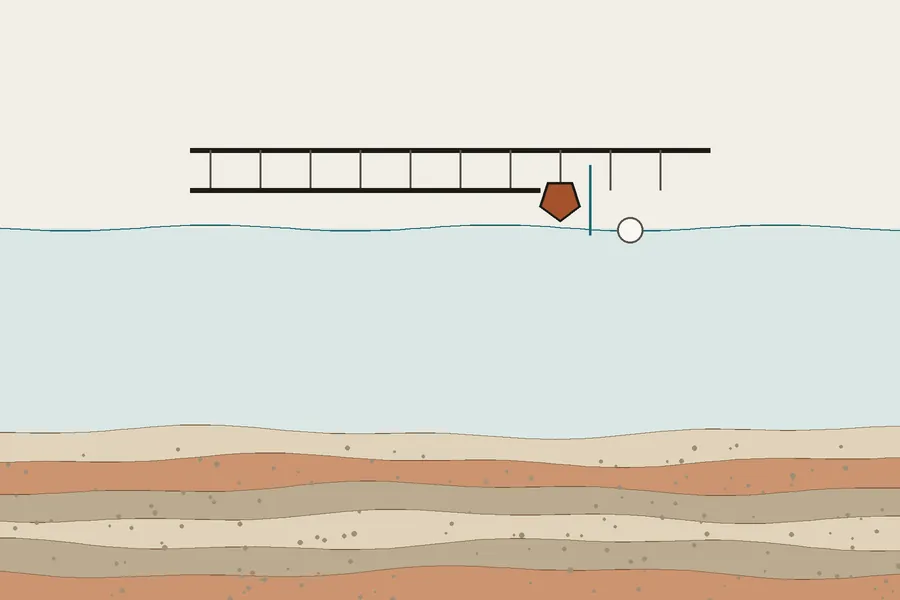
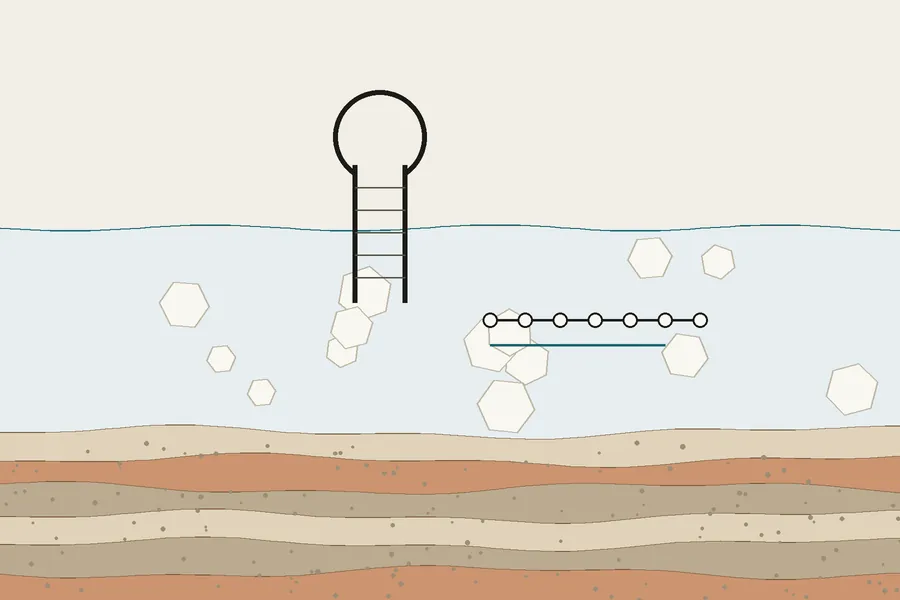
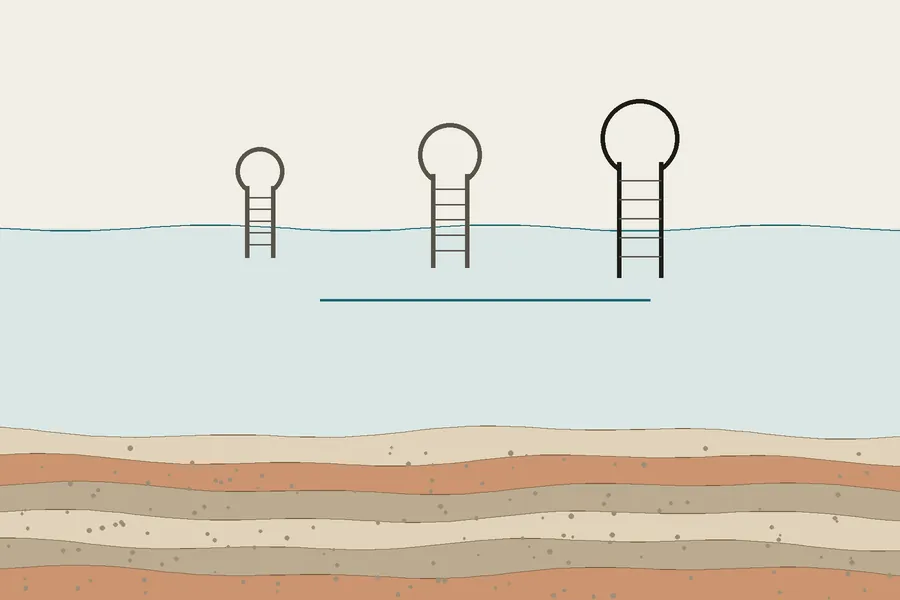
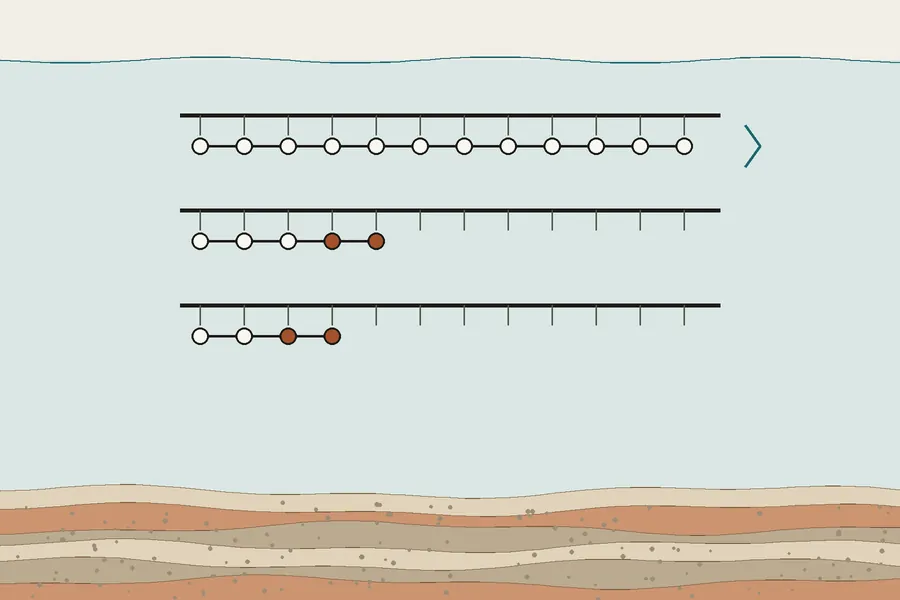
Illustration: three copies growing along templates under water; the top one runs the full length, the other two stop short just after rust-coloured wrong letters.

Copying that stops early could leave mostly error-free RNA copies, because a mistake stalls the copy

Göppel T, Obermayer B, Chen IA, Gerland U · eLife 15:e72856

In a model with measured rates, a copy with an early mistake slows down, so short copying windows repeated in cycles could make exact copies of strands up to about 50 letters.

Before enzymes, RNA had to be copied by chemistry alone, and that chemistry gets roughly one letter in ten wrong. At that rate, long working sequences would soon be lost to errors. This team built on a known quirk: one mistake tends to bring more mistakes and slows the copy right down. So if copying runs only for a short time, the copies that finish are mostly the clean ones. In their model, warm and cool cycles that keep restarting the copying could make exact copies of strands up to about 50 letters long.

Stochastic (Gillespie) and analytical model of enzyme-free, template-directed primer extension with parameters from experiments. In the open 2021 preprint: mean error probability per step 0.08 (DNA) and 0.17 (RNA); after a first mismatch the error probability rises more than sevenfold (DNA) or about threefold (RNA) and extension stalls by one to two orders of magnitude; a second mismatch slows it about sixfold more. A finite copying window trades yield for fidelity; in cyclic environments (temperature cycles that melt products off templates) fidelity and yield rate rise together if templates are not too long. Time to an exact copy grows roughly exponentially with length; set against estimated hydrolysis lifetimes, the published abstract reports exact copies up to about 50-mers. Main results use DNA parameters. No new experiments. The eLife page blocks scripted reading, so authors, venue, date and abstract numbers were checked on Crossref and eLife's article XML, and the parameter values come from the preprint (bioRxiv 10.1101/2021.08.06.455386).

Planned test

What we take from it. For the copying step in our RNA world models (tasks #2 and #12) we add kinetic error filtering as an option: a stall factor after a mismatch and a finite copying window per cycle, and check whether it moves the error threshold far enough to keep a ribozyme-length sequence. It is a model, so it enters as a hypothesis with its parameters, not as a measured step.
Preprint

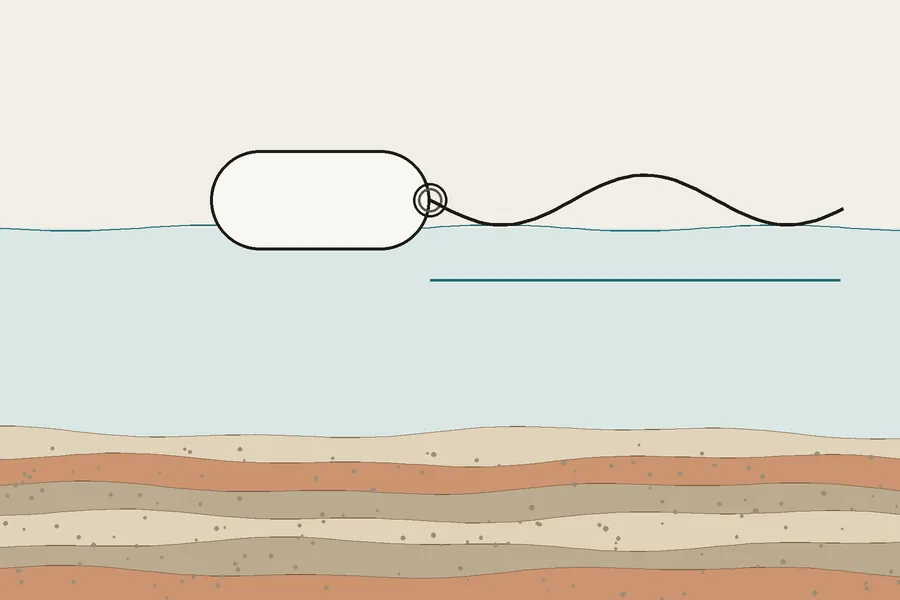
Illustration: a rod-shaped cell in shallow water with a long wavy tail and ringed motor at its base, above layered rock.

The first bacterium had a full flagellum, about twice the parts earlier counted

Selcuk, Andrianova, Beeby, Kearns et al. · bioRxiv

Sensitive searches across 80,789 genomes raise the ancestral flagellar gene set from 24 to about 50.

Bacteria swim with a spinning tail called a flagellum, built from 40 or more parts. Earlier studies said the first bacterium had only 24 of them, implying a simpler early motor. This team searched far more genomes with more sensitive tools and found about twice as many parts were already present. Many modern bacteria have since lost some parts. The lesson is that very old genes are easy to miss when they have changed a lot.

80,789 GTDB proteomes, relaxed HMM searches, co-presence, order-level consensus tree from 74 gene trees. 52 ancestral proteins in the June text; 49+1 = 50 in the November abstract. No probabilistic reconciliation. Shows homology-detection failure as a source of false absences at deep nodes. Dated by version 2 (posted 13 Nov 2026); version 1 was posted in June.

Planned test

What we take from it. For #32 we add a homology-search failure step to the simulated pipeline, since missed divergent homologs push deep-node presence down before reconciliation even starts.

Paper

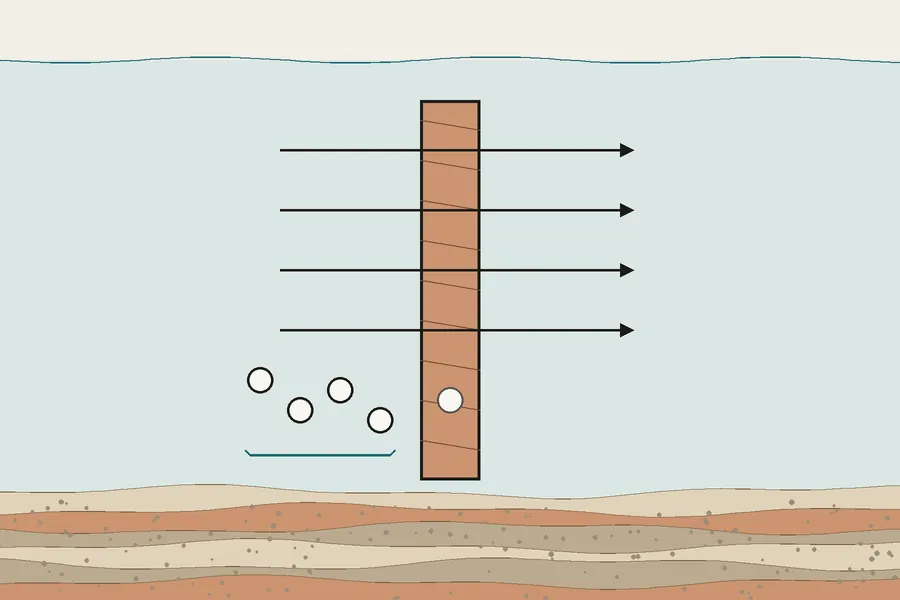
Illustration: a thick mineral wall in shallow water with four straight arrows running through it, while round ions queue on one side and one sits stuck inside the wall.

Vent minerals carry electrons easily but ions slowly, so charge balance may limit carbon reduction at vents

Altair, Lindenfelser, Galante, Varela, De Decker, Hudson · Chemical Communications

Measured on the same samples, synthetic vent minerals conduct electrons tens of thousands of times better than ions.

One idea for how life began places it at alkaline vents on the early sea floor. Thin mineral walls kept warm alkaline fluid apart from a more acidic ocean, and electrons crossing those walls could turn carbon dioxide into organic molecules. But every electron that crosses needs a matching ion to keep the charges balanced. This team measured both on synthetic vent minerals. Electrons moved easily and ions moved far more slowly, so ions, not electrons, may set the pace.

FeS, Fe(Ni)S and green rust made by co-precipitation, centrifuged to pastes, hydrated with ocean-analogue fluid; 0.108 cm3 between graphite electrodes. Two-electrode potentiostatic impedance spectroscopy at open circuit, 1 Hz to 1 MHz, 10 mV, room temperature; equivalent-circuit fits with 2-15% parameter error. Electronic conductivity 1.5e-2, 1.2e-2 and 6.7e-3 S/cm; ionic 4.97e-7, 2.37e-8 and 8.12e-9 S/cm (FeS, Fe(Ni)S, green rust). Living membranes, from the literature: about 5e-10 electronic and 1.27e-8 ionic. No CO2 reduction was measured, no pH gradient was applied, and pastes are not chimney walls. Short communication, read in full (open access).

Planned test

What we take from it. For the vent route step table (task #4) we split charge balance across the wall from electron transfer and record it as its own step, with these conductivities and their caveats. A vent route that needs sustained CO2 reduction across a mineral wall now has one more hand-off to explain.

Paper

Illustration: a primer strand copying along a template stops at one flipped, rust-coloured letter, with the next letter waiting unused.

A single mirror-image letter stops RNA copying cold

Essex, Jia, Zhang, Szostak · Journal of the American Chemical Society

In modern nonenzymatic RNA copying, an L-nucleotide at the end of a growing strand blocks any further extension.

Life's RNA uses only one mirror form of its sugars. Early chemistry would have made both. This study tested what the wrong-handed letters do to RNA copying without enzymes. Mixed pairs still bind the template but react slowly, which slows copying. Worse, once a wrong-handed letter is added to the end, copying stops, because its reactive group points the wrong way. Sorting out handedness must have come before copying.

Abstract only. 2-aminoimidazole-activated D and L nucleotides form heterochiral imidazolium-bridged dinucleotides slightly faster than homochiral ones; heterochiral bridges bind D-RNA primer-template complexes well but react slowly (competitive inhibition); L/L bridges show higher Km and much slower extension. Crystal structures: L-nucleotides base-pair normally but the reactive phosphate is misoriented; a 3'-terminal L-nucleotide is a chain terminator.

Planned test

What we take from it. Our step tables (#4/#5) should list near-homochiral activated nucleotides as an input to the copying step, so the chirality hand-off is scored as a gap.

Paper

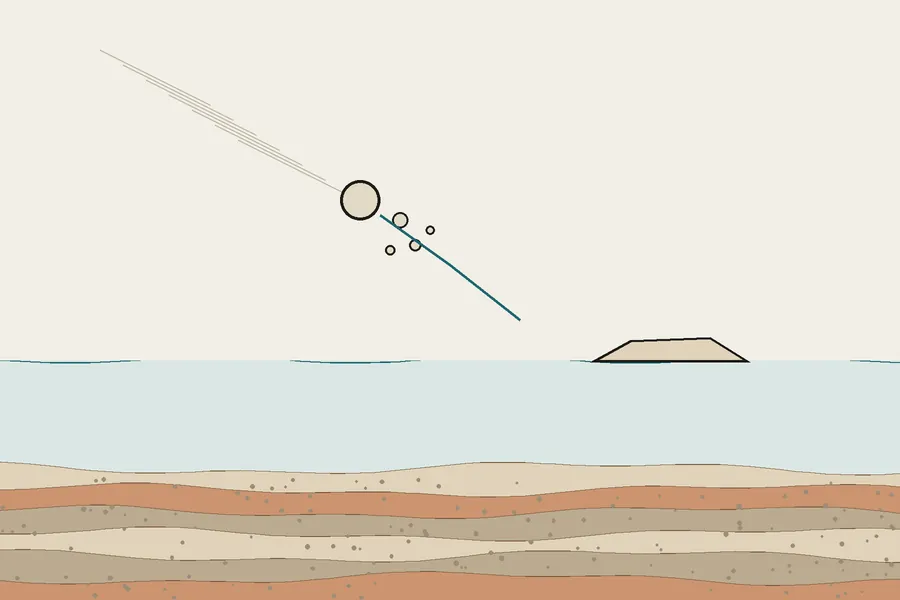
Illustration: a comet breaking into fragments as it falls toward a wide sea with only a small island of land.

Comets probably did not deliver concentrated cyanide to early Earth

Anslow, McDonald, Bonsor, Rimmer et al. · Scientific Reports

Best-case simulations give a median of zero comet impacts that left 10 mM HCN on land.

Many origin-of-life recipes start with concentrated hydrogen cyanide, and comets carry a lot of it, so comets are often named as the supplier. This study simulated early Earth's comet bombardment a hundred thousand times, letting comets break up in the air, heat up on impact and land only on the little dry land there was. In most runs, not a single comet left enough cyanide in one place. Mars, with a thin atmosphere and slower impacts, would have done far better.

10^5 Monte Carlo runs; median successful (>10 mM HCN on land) impacts = 0; 54% of runs had none; most likely timing 4.41 (+0.11/-0.29) Gya; fewer than 5% of runs had a success after 4.03 Gya. Without land limits: Mars 744 ± 27, Earth 87 ± 9, Venus 24 ± 5. All poorly known inputs were set to favour delivery. Caveats: HCN survival model ignores strength and porosity; long-period comets excluded; other feedstocks assumed to be worse.

Background

What we take from it. Removes or downgrades cometary HCN as a feedstock source in the pond and cyanosulfidic step tables (#5/#17/#20); local feedstock must come from atmospheric or crustal sources instead.

Preprint

Illustration: a small RNA hairpin beside a long chain of copied beads, one bead in rust marking an error.

A polymerase ribozyme now copies RNA with 94% accuracy per letter

Horning, Nasser, Joyce · bioRxiv

Thirty-three rounds of evolution made an RNA enzyme that copies RNA more accurately and copies harder templates.

An RNA world needs an RNA molecule that can copy RNA. Lab-evolved polymerase ribozymes can already make long strands, but they make many mistakes and stall on folded templates. This team ran 33 more rounds of selection. Accuracy rose from 86% to 94% per letter, and the enzyme copied templates it used to fail on. It still cannot copy itself.

Preprint (abstract only). Fidelity measured while synthesizing the class I ligase ribozyme: 86% to 94% per nucleotide, from fewer misincorporations and less extension of mismatched termini. Broader template generality, including highly structured templates. At 94% per nucleotide the expected error-free length is short, so replication of a polymerase-length RNA remains out of reach.

Background

What we take from it. A comparison row for our QT45 net-replication result (#2/#18). It does not change that verdict, which rests on yield per cycle and strand decay rather than accuracy.

Paper

Illustration: a ring of four molecules forms a cycle; a branch leads to a side product and a teal line leads back into the cycle.

Side reactions do not automatically doom early metabolic cycles

Peng, Spencer, Baum · Journal of the Royal Society Interface

Once reactions are treated as reversible in an open system, side products can act as a backup store of the cycle's own molecules.

A classic objection to metabolism-first origins says that without enzymes, side reactions would drain a self-copying chemical cycle until it dies. This team worked through the math for the simplest cycles in a fed, flowing reactor. If a side reaction is truly one-way, it always hurts. But real reactions run both ways, and then the side product can turn back into the cycle's molecule. Depending on rates, the side reaction can hurt, do nothing, or even help.

CSTR with A + F <-> 2A and A <-> B. Irreversible side reaction: survival needs k1 > k3 + kd/f and always lowers [A]. Fully reversible: sign of U(k1..k4, kd, f) can be either way; stochastic runs show harmful-then-beneficial cases. Extended algebraically to a two-step cycle with three side reactions. Toy networks only.

Background

What we take from it. Bears on our RAF tasks #6/#8/#23: adds a dynamic persistence check that graph-only RAF detection lacks.

Preprint

Illustration: spheres, threads and a lens shape embedded in layered rock, like microfossils.

Lifeless protocells pass common tests for ancient microfossils

Gillet de Chalonge, Field, Dignam, Coutant et al. · bioRxiv (Paleontology)

Abiotic protocells made under vent-like conditions look like early microfossils and even get labeled bacterial or archaeal by an FTIR index.

Claims of the oldest fossils rest on shape and chemistry thought to be unique to life. This team made simple protocells from basic organic molecules in warm, alkaline, silica-rich water like a hydrothermal setting. They formed spheres, threads and lens shapes that look like supposed Archaean microfossils. Their infrared spectra overlapped with real microbes, and a common index even sorted them into bacteria, archaea or eukaryotes. The authors argue current fossil tests can be fooled.

(abstract only) Low-temperature alkaline hydrothermal synthesis with silica; FTIR spectra overlap; R3/2 ratio classifies eight protocell systems as bacterial, archaeal or eukaryotic. Preprint, not peer reviewed.

Background

What we take from it. Strengthens our rule for #22: any life-detection metric needs abiotic look-alike controls, not just meteorites.

Paper

Illustration: impactors falling through the sky onto cratered rock, with a small RNA hairpin in the water between them.

Impact model puts the RNA World's best window at about 4.33 billion years ago

Abramov, Medvegy, Kremer, Mojzsis · Nature Communications

A 3-D model of Hadean impacts finds the crust stopped being sterilized about 4.4 billion years ago, with a sweet spot for RNA chemistry near 4.33.

The young Earth was pounded by asteroids that heated its crust. This team simulated that heating across the whole planet and checked it against the oldest zircon crystals. Before about 4.4 billion years ago, impacts kept wiping out any fragile molecules. After that, cooler pockets and hot springs persisted, peaking around 4.33 billion years ago, a bit before most estimates of the last universal common ancestor.

3-D thermal bombardment model, 0.13-0.57 wt% delivered mass, zircon benchmark. Sterilization until about 4.4 Ga; biocompatible near-surface volume > 90% by 4.3 Ga; sweet spot 4.33 Ga (shifts to about 4.4 Ga at 0.13 wt%). Sensitive to the assumed delivered mass.

Background

What we take from it. Context only: it sets the geological clock that LUCA-size arguments are measured against.

Paper

Illustration: two short vent chimneys on the seafloor under faint, nearly flat lines suggesting a weak gradient.

Alkaline vent theories rest on conditions ancient vents may not have had (Tutolo)

Tutolo · PNAS

A geochemist argues early Lost City-type vents lacked hot pH gradients, sulfide and an easy path to complex hydrocarbons.

A popular idea puts life's start at alkaline seafloor vents, where natural proton gradients across iron-sulfur walls could power the first cells. This review argues the ancient versions of these vents were shallower and shorter-lived. Lost City fluids only become very alkaline after they cool, so there is no strong gradient where it is hot. Early oceans had little sulfur, so iron-sulfur walls would be rare. And making long carbon chains for membranes looks too slow at those temperatures.

(abstract only) Four lines: shallower and less focused ancient serpentinizing circulation; hyperalkalinity only after cooling; near-absent sulfide given sulfate- and sulfide-poor oceans and S-poor serpentinites; kinetic barriers to complex hydrocarbon formation seen at Lost City and in the lab. Also questions vent-based habitability arguments for Mars, icy moons and exoplanets.

Planned test

What we take from it. Affects our vent route step table (#4/#5): we plan a scored variant with gradient-, sulfide- and hydrocarbon-dependent steps failing. Sealed test: before rescoring, record the predicted change in route success under the Tutolo variant.

Preprint

Illustration: a curved RNA shape wraps like a hand around a double strand and one incoming letter.

First 3D structures of RNA polymerase ribozymes show how they grip their templates

Szokoli et al.; Strutzenberg, Horning, Joyce, Lyumkis et al. · bioRxiv

Two cryo-EM studies reveal how lab-evolved RNA copiers are built, and one structure already led to a faster enzyme.

The best lab models of an RNA world copier were evolved for years without anyone seeing their shape. Two groups have now imaged them. One structure shows a hidden pairing that ties up the end the enzyme needs, and breaking it made the enzyme faster. The other shows the enzyme holding template, primer and incoming letter in a 'right hand' shape like protein polymerases. Structure can now guide design.

Preprints (abstracts only). Szokoli et al.: substrate-free tC19Z at 3.1 Å; accessory domain contacts the ancestral class I ligase via a loop-loop contact, a Mg2+ seam and a six-base stack; an ectopic pairing sequesters the 5' end, and compensatory mutations raise extension rate. Strutzenberg et al. (doi:10.64898/2026.08.30.748161, Joyce and Lyumkis labs): polymerase bound to template, primer and an NTP analog; modular flanking elements around a conserved ligase core, arranged like the 'right hand' of protein polymerases.

Planned test

What we take from it. Gives our QT45 contact test (#30, negative) a positive control: check whether epistasis-based contact prediction recovers contacts in a solved polymerase before trusting it on QT45.

Paper

Illustration: a branching tree rooted in rock, with bubbles of gas rising from its base.

Better reconciliation models put the archaeal root at Euryarchaeota and make the first archaeon a methanogen

Huang, Dombrowski, Mahendrarajah, Wahl et al. · Nature Communications

Letting gene gain and loss rates vary by lineage moved the archaeal root away from small-genome symbionts and gave a 1.6 to 2.1 Mb thermophilic methanogen ancestor.

Archaea are one of the two great branches of microbial life, and nobody agrees where their family tree starts. Some trees put tiny parasitic archaea at the base, which would mean the first archaeon was small and simple. This team counted how genes were copied, lost and passed sideways across 257 genomes, and let those rates differ between groups. Tiny parasites lose genes fast; once the model allowed that, the root moved to the methane-making Euryarchaeota. The reconstructed ancestor was a heat-loving methane maker with roughly 800 to 1,700 gene families.

AleRax v1.1.1, 7,059 arCOG families, 1,000 bootstrap trees each, 257 genomes. BIC-selected 72-parameter branch-wise DTL model; AU tests leave only the Euryarchaeota and MHH roots. DPANN loss rate 0.40-0.45 vs 0.26-0.27 elsewhere; a global model gives a small-genome-attraction root. LACA 1.58 Mb (Euryarchaeota root) or 2.06 Mb (MHH root); 800-1,219 or 1,190-1,709 families from PP thresholds 0.5 and 0.75. No simulation test of root-content recovery is reported in the main text; no false-negative correction. Data and reconciliations on Zenodo 18701544.

Planned test

What we take from it. Feeds #32 directly: we add lineage-varying loss rates to the Zombi truth model, and we can apply the calibration to their LACA per-family PPs as a second target. A sealed test fits naturally: predict the calibrated LACA family count from our LUCA-depth calibration before running it on their PPs.

Paper

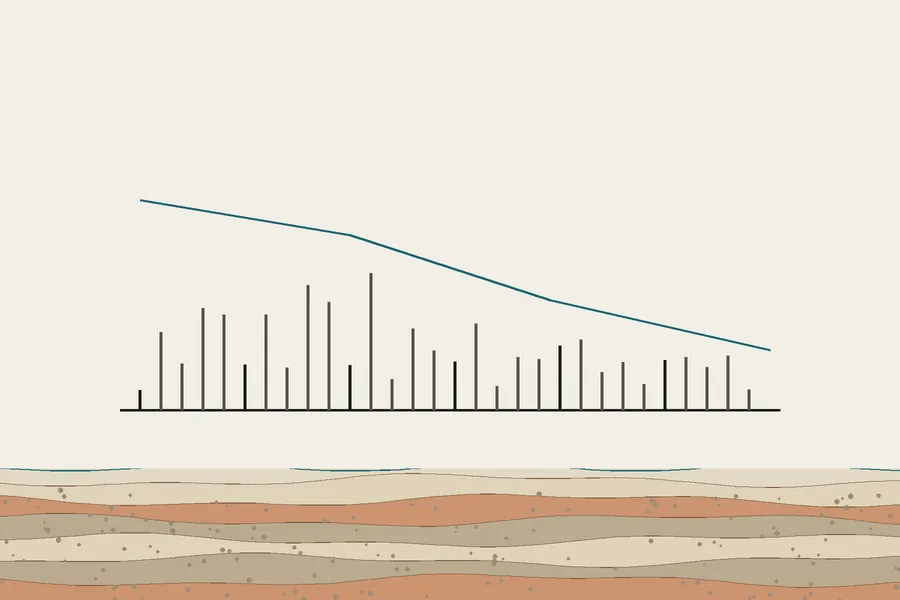
Illustration: a mass spectrum of vertical peaks above layered rock, with a teal line sloping across the peaks.

Assembly index can be estimated from simple mass spectra, but the life test is still untested

Rutter, Sharma, Seet, Obeh Alobo et al. · PNAS

A machine-learning model predicts a molecule's assembly index from flight-style mass spectra; no living vs non-living samples were compared.

Assembly theory scores a molecule by the fewest joining steps needed to build it. The Cronin group trained a model to guess that score from the kind of simple mass spectrum a Titan or Europa probe would record. The guesses were about three times closer than a curve fitted to molecular weight. But the paper never measured samples from living and non-living sources, so it does not show that the score detects life. Its own database comparison found that, at equal size, catalogued lab molecules score higher than natural products.

XGBoost on vectorized NIST SRD 69 EI MS1 spectra (n = 32,603 molecules, 70/30 split). Relative MSE 0.04 vs 0.12 for the best baseline; 0.07 on MassBank EI-B vs 0.12 for a molecular-weight power law. CFM-ID simulated MS2 at fixed energy gives about 0.03; mixing energies hurts. MA scales with bond count with exponent 0.74 (R2 0.74). At matched bond count PubChem > COCONUT 2.0 in MA. Data: Zenodo 10.5281/zenodo.20586263.

Planned test

What we take from it. Feeds #22 (red-team) and #7 (AI vs size null): we can rerun a size-matched natural-product vs PubChem comparison on their data. A sealed test: predict before looking that COCONUT mean MA is below PubChem mean MA at every bond count from 10 to 40.

Paper

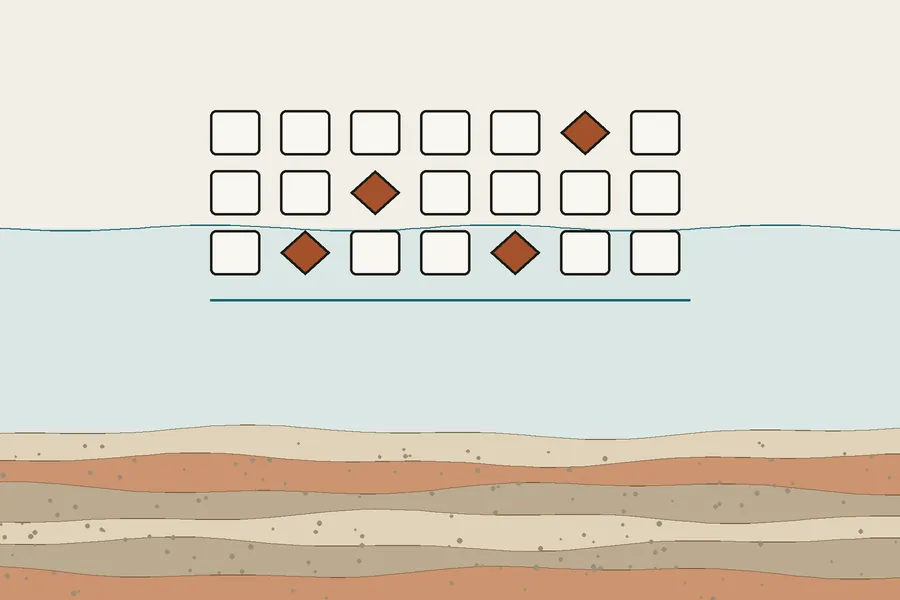
Illustration: a grid of pale tiles with several gaps filled by rust-coloured metal diamonds.

LUCA's enzyme set was incomplete; metals and phosphite may have filled the gaps

Mrnjavac, Hoffmann, Schlikker, Burmeister et al. · Science Advances

Of the core metabolic enzymes, 166 trace to LUCA while 127 were added later in the bacterial or archaeal lines, and nickel and palladium make ADP from phosphite in water.

This team asked which enzymes of core metabolism were already in the last universal common ancestor. Many amino acid and vitamin-making enzymes appear only after bacteria and archaea split, so LUCA's own enzyme kit had gaps. They propose that metals found at hydrothermal vents did those missing jobs. In the lab, nickel and palladium helped phosphite add a phosphate to AMP, making small amounts of ADP.

953 genomes, MCL clusters mapped to 424 core reactions. LUCA = present in >= 50% of genomes of >= 4 higher taxa in both domains (no reconciliation). 166 LUCA, 89 LBCA-lineage, 38 LACA-lineage, 37 unassigned. Ni0 gave 6.74 uM ADP from 100 mM AMP. Caveat: an occupancy rule cannot tell early transfer from inheritance.

Planned test

What we take from it. For #32 we use their occupancy rule as a baseline classifier in the simulations; for #28 and #23 their enzyme-age table is a second labelling to test.

Paper

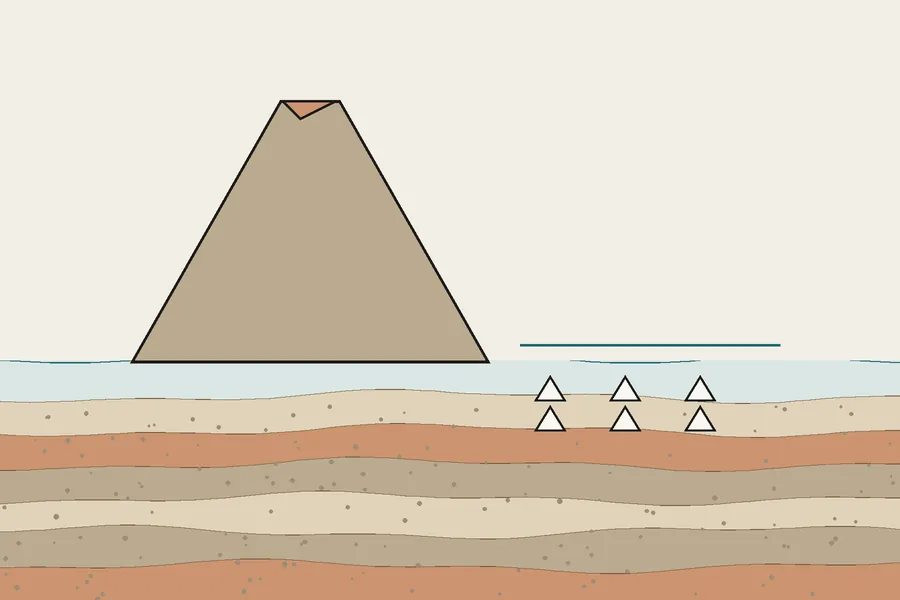
Illustration: a volcano beside a shallow lake holding small pale triangles for dissolved phosphorus.

Early Earth's own volcanic rocks could have supplied reactive phosphorus

Baidya, Walton, Kalita, Szilas et al. · Nature Communications

Common lava and mantle rocks carry phosphite and pyrophosphate that weathering could release.

Life needs phosphorus, but the usual form, phosphate, is hard to dissolve and slow to react. Chemists prefer phosphite and pyrophosphate, which are more soluble and reactive, but it was unclear where early Earth got them besides rare meteorite pieces. This team measured rocks like basalt and komatiite from 15 places and found that on average about 5% and up to 24% of the phosphorus in ultramafic rocks is phosphite. A simple model says a shaded volcanic lake could build up tens of micromolar phosphite, while the open ocean would stay far lower.

Phosphite up to 7%, 24%, 17%, 0.6% of total P in olivine, peridotite, komatiite, basalt; pyrophosphate up to 5% (komatiite) and 0.4% (basalt). Oceanic crust 3.5 to 2.0 Ga: 4 to 5 ppm each. Deep ocean box model: up to 1 nM with UV oxidation, 1 to 2 µM if photo-oxidation is suppressed (abstract says up to 1 µM). Lake: up to 67 µM UV-shielded, below 0.1 µM exposed. Caveats: simple box models, no pyrophosphate model, no test that these levels drive phosphorylation.

Planned test

What we take from it. Feeds the phosphorus supply rows of the pond and vent step tables (#4/#5/#20). A sealed test is possible: before scoring, write down whether the 67 µM shielded-lake ceiling clears each downstream phosphorylation step's stated concentration, then score.

Paper

Illustration: a faint gas cloud holding a four-bead chain, with a radio dish on the rock below pointing at it.

First sugar found in interstellar space: erythrulose

Jiménez-Serra, García de la Concepción, Cuppen, Rey-Montejo et al. · Nature Astronomy

A four-carbon sugar shows up in a Galactic Centre gas cloud, more common than smaller sugars.

Sugars like ribose have been found in meteorites and in samples from asteroid Bennu, but no sugar had ever been seen in the gas between stars. Using two radio telescopes, this team found erythrulose, a four-carbon sugar, in a cloud near the centre of our galaxy. Oddly, smaller three-carbon sugars were not seen at all. Computer models suggest erythrulose forms on icy dust from two common smaller molecules, so sugars might be made before planets form.

G+0.693-0.027; 12 line sets (17 transitions), p6 = 0.2% chance alignment; N = (8.7 ± 0.8) x 10^13 cm^-2, abundance (6.4 ± 0.6) x 10^-10; C3 sugars ≤4 x 10^-11 and ≤7 x 10^-11, so erythrulose is ≥8 to 17 times more abundant. Proposed route: glycolaldehyde radical plus ethylene glycol radical on ice, both enantiomers 50% each. Ice models within a factor of 5 for erythrulose but overproduce C3 sugars by about 25 to 70. Delivery estimate about (0.5 to 50) x 10^9 kg. Caveat: one source, crowded spectrum.

Background

What we take from it. Adds an exogenous C4 sugar feedstock option to the pathway map (ice-RNA and pond routes). It does not touch our sealed Bennu/Ryugu nucleobase and ammonia predictions directly.

Paper

Illustration for: Critics say assembly theory reduces to dictionary compression (Ozelim, Uthamacumaran, Abrahão et al.)

Critics say assembly theory reduces to dictionary compression

Ozelim, Uthamacumaran, Abrahão, Hernández-Orozco et al. · npj Complexity

The latest round of the assembly-theory dispute: critics say the 2025 defence used incomplete controls.

Assembly theory proposes a number, the assembly index, that counts how many joining steps a molecule needs; its authors say high values in large amounts mean life. In 2025 they argued the index is not just a file-compression score. This reply reruns and extends their examples and says that, once proper comparisons are added, the index behaves like ordinary dictionary compression and adds nothing new.

Reply to Kempes et al. 2025 (npj Complexity 2:27, doi:10.1038/s44260-025-00049-9), which argued the assembly index sits in a different computational complexity class from Shannon entropy, Huffman and LZW. Ozelim et al. say the defence's experiments are incomplete as controls, that extended versions overlap with dictionary-based statistical compression, and restate their earlier claim of equivalence to the Shannon entropy rate (Abrahão et al. 2024, PLOS Complex Systems, doi:10.1371/journal.pcsy.0000014). Earlier rounds: Hazen et al. 2024 (minerals up to index 21) and the Walker et al. 2024 reply (doi:10.1098/rsif.2024.0367).

Planned test

What we take from it. Both sides argue in theory. Our task #7 settles one part with data: does assembly index separate biotic from abiotic mass-spec samples better than molecular weight or LZ complexity alone?

Preprint

Illustration: a tree whose branch tips carry columns of beads, some of them missing or faded.

Phenotype predictors trained on deliberately noisy genomes read traits back to the first bacterium

Koldaeva, Bagrova, Mitchell, Hugenholtz et al. · bioRxiv

Adding fake gene losses and gains during training lets models predict oxygen use and cell envelope for reconstructed ancestral genomes at the bacterial root.

Reconstructed ancestral genomes are blurry: some genes are missed and some are wrongly added. This team trained computer models to guess traits like oxygen use from gene lists, and during training they blurred the lists on purpose. The blurred-trained models kept working on uncertain ancestral genomes. They predict the first bacterium lived without oxygen, had two membranes and liked warm water, roughly 46 to 75 C.

XGBoost on COG copy numbers, taxonomy-aware holdouts. Noise: Poisson false negatives and false positives with rates drawn from uniform, exponential or gamma distributions. Ancestral expected copy numbers from reconciliation on a 1,007-taxon tree. No measured reconciliation error rates at the LBCA are given; the noise is an assumption. GC content is not recoverable at the root.

Background

What we take from it. Context for #32: our simulations can supply measured deep-node false-negative and false-positive rates that their noise model currently assumes.

Paper

Illustration for: Lipid membranes made from scratch without an existing membrane (Khanal, Fracassi, Harjung, Burkart, Devaraj)

Lipid membranes made from scratch without an existing membrane

Khanal, Fracassi, Harjung, Burkart, Devaraj · Nature Communications 17:6920

Vesicles assembled from lipids built out of acetate and cysteine, with no pre-existing membrane to grow from.

Every cell membrane today grows from an older membrane, which raises a chicken-and-egg question for the first cell. This team built lipid tails from two simple molecules, acetate and cysteine, using enzymes dissolved in water. The new lipids assembled themselves into bubbles with two-layer walls, and some of these bubbles could hold a difference in acidity between inside and outside.

De novo bilayer formation without pre-existing membranes, membrane proteins or lipid templates. Lipid tails are made by soluble enzymes from acetate and cysteine and form diacyl lipids that assemble into vesicles. Pore-forming peptides let precursors in, so new lipid keeps forming; glycolipid compartments maintain proton gradients. The route uses enzymes, so it is not a prebiotic pathway.

Planned test

What we take from it. Evidence for the lipid-world row and the compartment step of the pathway map. Because it relies on enzymes, we score it as 'shown with biological catalysts', not as a prebiotic step.
Paper

Illustration for: All five nucleobases found in asteroid Ryugu (Koga, Oba, Takano, Naraoka et al.)

All five nucleobases found in asteroid Ryugu

Koga, Oba, Takano, Naraoka et al. · Nature Astronomy 10:655-663

Ryugu, like Bennu, holds all five letters used in DNA and RNA.

Japan's Hayabusa2 brought back grains of asteroid Ryugu. Uracil was found in them in 2023; this study now reports all five nucleobases, the 'letters' of DNA and RNA. Ryugu has roughly equal amounts of the two families of bases, unlike Bennu and the Orgueil meteorite, which lean one way. The balance tracks how much ammonia each body had, which hints that the bases formed by one shared chemistry under different local conditions.

Adenine, guanine, cytosine, thymine and uracil in Ryugu samples. Purines and pyrimidines are near equal in Ryugu; Murchison is purine-rich; Bennu and Orgueil pyrimidine-rich. Across Ryugu, Bennu and Orgueil the purine-to-pyrimidine ratio correlates negatively with ammonia.

Planned test

What we take from it. A ratio-versus-ammonia trend is exactly the kind of relationship task #11 can extend into a sealed prediction for compounds not yet reported from returned samples.

Paper

Illustration for: A small polymerase ribozyme that can synthesize itself and its complementary strand (Gianni, Holliger et al.)

A small polymerase ribozyme that can synthesize itself and its complementary strand

Gianni, Kwok, Wan, Goeij, Clifton, Colizzi, Attwater, Holliger · Science 391:1022-1028

A 45-letter RNA, QT45, found in random sequences, copies RNA in ice and made both a copy of itself and of its partner strand.

RNA-world ideas need an RNA that copies RNA. The known RNA copiers were large, too big to arise by chance. QT45 is only 45 letters long and was fished out of random sequences. Working in slightly alkaline ice and fed three-letter RNA pieces, it copied its partner strand and, with chosen pieces, itself. The yields are tiny, about 0.2% after 72 days, but the find suggests such copiers may be less rare than thought.

QT45 (45 nt) from random pools catalyses general RNA-templated RNA synthesis from trinucleotide triphosphates in mildly alkaline eutectic ice. Complementary-strand synthesis with a random triplet pool at 94.1% per-nucleotide fidelity; self-synthesis with defined substrates; both ~0.2% yield in 72 days. Triplets are pre-activated and supplied. Online 12 Feb 2026, issue dated March 2026.

Planned test

What we take from it. The closest result to the step from template copying (L2) to self-replication (L3). Task #2 extracts its numbers; task #12 seals a prediction for its untested double mutants. The founding plan's second-hand '0.02% over 72 days' was wrong; the paper says about 0.2%.

Paper

Illustration for: Bio-essential sugars, including ribose, in samples from asteroid Bennu (Furukawa et al.)

Bio-essential sugars, including ribose, in samples from asteroid Bennu

Furukawa, Sunami, Takano, Koga et al. · Nature Geoscience 19:19-24

Ribose, the sugar in RNA, and glucose found in Bennu; deoxyribose, the DNA sugar, was not.

With ribose found, every part of RNA has now been detected in Bennu's returned grains. The team also found glucose, the most plentiful sugar in the sample, and several other sugars. They did not find deoxyribose, the sugar in DNA. That fits the idea that RNA came before DNA, though it does not prove it.

Ribose 0.097 ± 0.014 nmol/g, lyxose 0.018 ± 0.007, arabinose 0.11 ± 0.03, xylose 0.079 ± 0.033, glucose 0.35 ± 0.05, galactose 0.014 ± 0.004 nmol/g. Total sugars 0.668 nmol/g, about 1 mol% of Bennu amino acids. 2-Deoxyribose not found. Online 2 Dec 2025, issue January 2026.

Planned test

What we take from it. Supports an RNA-first chemistry. Sugar ratios feed the Bennu abundance prediction (task #11).

Paper

Illustration for: Thioester-mediated RNA aminoacylation and peptidyl-RNA synthesis in water (Singh, Powner et al.)

Thioester-mediated RNA aminoacylation and peptidyl-RNA synthesis in water

Singh, Thoma, Whitaker, Satterly Webley, Yao, Powner · Nature 644:933-944

Amino acids carried on sulfur compounds attach to the ends of RNA in water, ahead of joining to each other.

Cells make proteins by first loading amino acids onto transfer RNAs, a job done by enzymes. This study shows a chemical way to do the loading without enzymes: amino acids bound to thiols, sulfur compounds still used by cells, stick to the right spot on RNA rather than linking up into random chains. Several prebiotic starting materials make these thiol compounds in water.

Aminoacyl-thiols react selectively with RNA 2',3'-diols over amines, so aminoacylation beats non-coded peptide bonding; scope covers 14 proteinogenic amino acids. Prebiotic nitriles, N-carboxyanhydrides and amino-acid anhydrides react with thiols (including CoA and coenzyme M) to give aminoacyl-thiols. Switching to thioacid activation favours peptides; one-pot peptidyl-RNA at neutral pH.

Planned test

What we take from it. A concrete step toward linking amino acids to RNA, which coding needs. It enters the pathway map as the activation step, with its conditions recorded.

Paper

Illustration for: Insufficient evidence for DMS and DMDS in the atmosphere of K2-18 b (Luque et al.)

Insufficient evidence for DMS and DMDS in the atmosphere of K2-18 b

Luque, Piaulet-Ghorayeb, Radica, Xue, Zhang, Bean, Samra, Steinrueck · Astronomy & Astrophysics 700:A284

No statistically significant detection of DMS or DMDS when all JWST data on K2-18 b are analysed together.

A 2025 claim said JWST had seen a gas on the planet K2-18 b that on Earth comes only from life. This team analysed all three JWST instruments' data together, using several processing pipelines and two retrieval codes. The evidence for the gas was not significant, and other simple molecules fit the data as well.

Joint 0.6-12 µm NIRISS, NIRSpec and MIRI analysis with three reductions and two retrieval codes. No statistically significant evidence for DMS or DMDS; methyl-bearing molecules such as ethane fit as well. With the best-fitting DMS/DMDS model, about 25 more MIRI transits are needed for a 3-sigma rejection of a flat line. arXiv:2505.13407.

Background

What we take from it. A reminder of how biosignature claims fail under proper alternatives. Off the origin-of-life path, so no test planned.

Paper

Illustration for: Carbon reduction powered by natural electrochemical gradients under vent conditions (Altair et al.)

Carbon reduction powered by natural electrochemical gradients under vent conditions

Altair, Dragoti, Sojo, Li et al., Hudson · JACS 147:28674-28683

A vent-wall reactor makes formic and acetic acid from CO2 and H2 using only pH gradients across iron-sulfide minerals.

The alkaline-vent idea says the first metabolism ran on the difference in acidity between vent fluid and seawater, across thin mineral walls. This team built a bench-scale wall from iron-sulfide minerals with hydrogen-rich alkaline fluid on one side and CO2-rich acidic water on the other. Small amounts of formic and acetic acid, the first two steps of an ancient carbon-fixing pathway, appeared on the seawater side.

FeS, Ni-FeS and FeS2 barriers produced micromolar formic and acetic acid on the ocean side (pH 5.7, CO2) against an H2, pH 11 vent side; e.g. FeS2 at 25 °C gave 4.2 µM formic and 2.5 µM acetic acid after 24 h, none on the vent side. Currents of 10 nA to 10 µA sufficed. At 75 °C on both sides Ni-FeS gave about 816 µM formic acid. Builds on Hudson et al. 2020 (PNAS, doi:10.1073/pnas.2002659117).

Planned test

What we take from it. Vent step tables (task #4) record these yields with their conditions. Products still stop at two carbons.

Paper

Illustration for: High-yield polymerisation of cyclic nucleotides under wet-dry cycling (Caimi, Braun, Fraccia et al.)

High-yield polymerisation of cyclic nucleotides under wet-dry cycling

Caimi, Langlais, Fontana, Wunnava, Bellini, Braun, Fraccia · ACS Central Science 11:1546-1557

Repeated drying and wetting joins all four RNA letters into short chains, with no added activating chemicals.

Warm-pond theories say pools that dry by day and refill by night could join RNA letters into chains. Here, nucleotides in a ring-shaped form joined up on their own when only water was added each cycle, at room temperature and mildly alkaline pH. The chains were short: a few percent reached four letters and about one in a thousand reached ten.

2',3'-cyclic nucleotides of A, U, G and C oligomerise without external activators under wet-dry cycling. Yields reach about 70% for G and at least 20% for the others; at pH 11 polymerisation is near-balanced across the four bases with Y = 36%. Products include up to 6% 4-mers and 0.1% 10-mers; growth and hydrolysis balance after about 10 cycles.

Planned test

What we take from it. First entry for the warm-pond row. The pond step table records that wet-dry cycling gives short mixed oligomers; the gap to copyable lengths is named.

Paper

Illustration for: Triplet substrates under pH and freeze-thaw cycles enable exponential RNA replication by a ribozyme (Attwater, Holliger et al.)

Triplet substrates under pH and freeze-thaw cycles enable exponential RNA replication by a ribozyme

Attwater, Augustin, Curran, Kwok, Ohlendorf, Gianni, Holliger · Nature Chemistry 17:1129-1137

An RNA enzyme replicated both strands of short double-stranded RNAs exponentially, including a piece of itself.

Copied RNA strands stick to their templates so tightly that copying stalls. This team found that the three-letter RNA pieces used as building blocks also hold the separated strands apart. Combined with cycles of freezing, thawing and acidity changes, an RNA polymerase ribozyme could replicate both strands of short RNAs over and over, including a fragment of the ribozyme itself. Started from random RNA, the system produced either a few winning replicators or slowly drifting mixtures.

Triplets bind and kinetically trap dissociated strands while serving as substrates, overcoming the strand-separation problem. With coupled pH and freeze-thaw cycles: exponential replication of (+) and (-) strands of dsRNAs, including a ribozyme fragment. Open-ended replication of random pools yielded defined replicators or diverse pools from partial ribozyme self-replication, drifting toward hypothesised primordial codons. Substrates are supplied by the experimenter.

Planned test

What we take from it. Corrects our site, which said 'no exponential growth yet' for RNA world. Ladder level L3 still needs the whole replicator copied from a setting's own feedstocks.

Paper

Illustration for: Abundant ammonia and nitrogen-rich organic matter in asteroid Bennu (Glavin, Dworkin et al.)

Abundant ammonia and nitrogen-rich organic matter in asteroid Bennu

Glavin, Dworkin, Alexander, Aponte et al. (62 authors) · Nature Astronomy 9:199-210

33 amino acids, 14 of the 20 used by life, and all five nucleobases in pristine Bennu samples; the chiral amino acids show no handedness bias.

NASA's OSIRIS-REx brought back dust and pebbles from asteroid Bennu, kept away from Earth's air and life. They hold 33 amino acids, 14 of them used in proteins, all five DNA and RNA bases and lots of ammonia. Amino acids come in left- and right-handed forms; life uses only left-handed ones. The Bennu amino acids whose handedness could be measured come in equal amounts, which weakens the idea that meteorites gave Earth its bias.

Bennu is richer in carbon, nitrogen and ammonia than Ryugu and most meteorites; 15N enrichments point to a cold outer-disc origin. 33 amino acids identified plus unidentified C6-C7 aliphatic ones; at least 23 N-heterocycles including all five canonical nucleobases; about 10,000 N-bearing species. All enantiomerically resolvable chiral non-protein amino acids (e.g. isovaline, norvaline) were racemic or near racemic, and racemic alanine and aspartic acid indicate negligible contamination.

Planned test

What we take from it. Building blocks were common in the early Solar System; the racemic result counts against a meteoritic origin of life's handedness. Feeds task #11.

Paper

Illustration for: The nature of the last universal common ancestor and its impact on the early Earth system (Moody et al.)

The nature of the last universal common ancestor and its impact on the early Earth system

Moody, Álvarez-Carretero, Mahendrarajah, Clark et al. (19 authors) · Nature Ecology & Evolution 8:1654-1666

Places LUCA about 4.2 billion years ago as a complex anaerobic acetogen living within an ecosystem.

LUCA is the most recent ancestor shared by all living things. Using gene families that duplicated before LUCA, this team dated it to about 4.2 billion years ago, early in Earth's history. They reconstruct it as a microbe as complex as modern bacteria, living without oxygen, making acetate, and already part of a community of other organisms.

Age about 4.2 Ga (4.09-4.33 Ga) from divergence times of pre-LUCA paralogues under cross-bracing calibration. Reconciliation suggests a genome of at least 2.5 Mb (2.49-2.99) encoding around 2,600 proteins; a prokaryote-grade anaerobic acetogen with an early immune system, embedded in an ecosystem.

Planned test

What we take from it. A headline claim we re-test for robustness to its modelling choices (tasks #9 and #10). LUCA is late: it constrains the end of the origin story, not its start.

Paper

Illustration for: Heat flows enrich prebiotic building blocks and enhance their reactivity (Matreux, Aikkila, Scheu, Braun, Mast)

Heat flows enrich prebiotic building blocks and enhance their reactivity

Matreux, Aikkila, Scheu, Braun, Mast · Nature 628:110-116

Heat flowing through rock cracks sorts a mixed prebiotic soup, doing the purification chemists normally do by hand.

Most origin-of-life chemistry works only because chemists purify the product of one step before the next. This team showed that warm water in thin rock cracks, heated on one side, can sort more than 50 building blocks out of a mixture. In one test the sorting boosted a reaction joining two glycines by a factor of about 100,000.

Thermophoresis in crack-like geo-compartments separates more than 50 prebiotically relevant compounds (amino acids, nucleobases, nucleotides, polyphosphates, 2-aminoazoles) Experiments in single and three-chamber set-ups gave enrichments such as 23-fold; the up-to-three-orders-of-magnitude concentration ratios and the five-orders-of-magnitude rise in glycine dimerisation yield come from simulated 20 x 20 crack networks. Robust across crack sizes, pH, solvents and temperatures.

Planned test

What we take from it. A named physical process that may stand in for a purified hand-off. The compatibility rule (task #3) must say whether such processes count.

Paper

Illustration for: RNA-catalysed evolution of catalytic RNA (Papastavrou, Horning, Joyce)

RNA-catalysed evolution of catalytic RNA

Papastavrou, Horning, Joyce · PNAS 121:e2321592121

An RNA polymerase ribozyme, not a protein, ran Darwinian evolution of another ribozyme, but only when its copying was accurate enough.

Evolution needs copies that are mostly right. Here an RNA enzyme repeatedly copied a smaller RNA enzyme, and the copies that still worked were kept each round. With an older, sloppier copier the population drifted into nonsense. With an improved copier, new and fitter variants evolved. The copier itself was not evolving, so this is not yet open-ended evolution.

A higher-fidelity polymerase replicates the hammerhead ribozyme by reciprocal synthesis of both strands, with selection for cleavage. Two parallel lineages: the low-fidelity one lost hammerhead function; the high-fidelity one evolved variants with improved fitness from mutations that raised replicability, at a small cost in activity. Deep sequencing tracked the succession.

Planned test

What we take from it. The nearest result to ladder level L4. Our 'functional RNAs are common' bench uses the same kind of deep-sequencing counts.

Paper

Illustration for: Molecular assembly indices of mineral heteropolyanions (Hazen et al.)

Molecular assembly indices of mineral heteropolyanions

Hazen, Burns, Cleaves, Downs, Krivovichev, Wong · J. R. Soc. Interface 21:20230632

Some mineral building units score above the assembly-index threshold proposed for life.

Assembly theory says molecules needing 15 or more joining steps, found in many copies, are a sign of life. This team calculated the score for clusters of atoms that form in water and build some minerals. The most complex, in the rare minerals ewingite and ilmajokite, scored 21, so a high score alone cannot mean life.

Heteropolyanions range from assembly index 2 (H2CO3, Si(OH)4) to 21 (ewingite, ilmajokite). Reply by Walker, Mathis, Marshall and Cronin (J. R. Soc. Interface 21:20240367, 2024): the ~15 threshold comes from experimentally measured covalent organic molecules, while these indices are theoretical, from crystal structures of charged units not isolable in solution. Counter-reply: Hazen et al., 21:20240622.

Planned test

What we take from it. A direct challenge to assembly index as a biosignature; task #7 tests it against a size-only classifier.

02Landmarks

The papers that set the terms of the question

Landmark

Illustration for: The physiology and habitat of the last universal common ancestor (Weiss et al.)

The physiology and habitat of the last universal common ancestor

Weiss, Sousa, Mrnjavac, Neukirchen, Roettger, Nelson-Sathi, Martin · Nature Microbiology 1:16116

355 protein families point to a LUCA that lived on hydrogen, CO2 and iron, probably at a hydrothermal setting.

This team sorted 6.1 million genes from bacteria and archaea into families and kept only 355 whose family trees reach back to the common ancestor. Those genes describe a heat-loving microbe that lived without oxygen, fed on hydrogen and CO2 and relied on iron-sulfur chemistry.

From 286,514 protein clusters, 355 families (~0.1%) trace to LUCA by phylogenetic criteria: anaerobic, CO2-fixing, H2-dependent with a Wood-Ljungdahl pathway, N2-fixing and thermophilic, rich in FeS clusters and radical mechanisms. Clostridia and methanogens are basal.

Planned test

What we take from it. One of the two gene sets our LUCA robustness scan (task #10) compares with Moody et al. 2024.

Landmark

Illustration for: Synthesis of activated pyrimidine ribonucleotides in prebiotically plausible conditions (Powner, Gerland, Sutherland)

Synthesis of activated pyrimidine ribonucleotides in prebiotically plausible conditions

Powner, Gerland, Sutherland · Nature 459:239-242

RNA's C and U building blocks made by a route that skips free ribose and free bases, the step that had blocked RNA-world chemistry.

Joining a base to ribose sugar, the obvious way to make an RNA letter, does not work for C and U. This team found a side route from simple starting molecules that builds the sugar and base together and ends with an activated nucleotide. Phosphate, though only added into the product at the end, steers several earlier steps.

Feedstocks cyanamide, cyanoacetylene, glycolaldehyde, glyceraldehyde and inorganic phosphate; route via arabinose amino-oxazoline and anhydronucleoside intermediates to activated pyrimidine ribonucleotides. Phosphate acts as general acid/base catalyst, nucleophilic catalyst and pH and chemical buffer.

Planned test

What we take from it. The root of the cyanosulfidic step table. Task #4 records which steps used purified intermediates.

Landmark

Illustration for: From ligase to polymerase: the class I ribozyme lineage (Bartel, Joyce and co-workers)

From ligase to polymerase: the class I ribozyme lineage

Johnston et al. 2001; Lincoln & Joyce 2009; Horning & Joyce 2016; Tjhung et al. 2020 · Science; PNAS

Twenty years of lab evolution turned an RNA that joins RNA into one that copies long RNAs, but not well enough to copy itself.

In 2001 the Bartel lab evolved an RNA that could extend another RNA along a template. Joyce's lab built two RNAs that made each other and grew exponentially (2009), then evolved a polymerase that amplified RNA more than 10,000-fold in an all-RNA version of PCR (2016). By 2020 it could make its own ancestor in three pieces, but copying errors left few of those working.

Johnston et al. 2001, Science 292:1319 (doi:10.1126/science.1060786): class I polymerase, accurate general RNA-templated primer extension. Lincoln & Joyce 2009, Science 323:1229 (doi:10.1126/science.1167856): cross-replicating ligases, self-sustained exponential amplification, doubling time about 1 h. Horning & Joyce 2016, PNAS 113:9786 (doi:10.1073/pnas.1610103113): >10,000-fold amplification of short templates. Tjhung et al. 2020, PNAS 117:2906 (doi:10.1073/pnas.1914282117): synthesises the class I ligase as three strands, most assembled ligases inactive because of copying errors.

Planned test

What we take from it. The baseline for the L2 to L3 gap. The fidelity numbers set the error threshold any ribozyme model in tasks #2 and #12 must respect.

Landmark

Illustration for: A production of amino acids under possible primitive Earth conditions (Miller)

A production of amino acids under possible primitive Earth conditions (Miller)

Miller · Science 117:528-529

Electric sparks through a mix of methane, ammonia, hydrogen and water made amino acids.

Stanley Miller circulated gases then thought to make up the early atmosphere, with water, and passed electric sparks through them for a week. Amino acids, building blocks of proteins, appeared. Later work suggests the early atmosphere was less reactive than Miller assumed, but the experiment started laboratory origin-of-life chemistry.

Spark discharge through CH4, NH3, H2O and H2 in circulating apparatus; amino acids identified by paper chromatography. Full text not opened (paywalled); details here from the bibliographic record and summaries, so no yields are quoted.

Background

What we take from it. Historical anchor for ladder level L0.