Preprint · 2 Oct 2026
Lifeless protocells pass common tests for ancient microfossils
Gillet de Chalonge, Field, Dignam, Coutant et al. · bioRxiv (Paleontology)
In a sentence
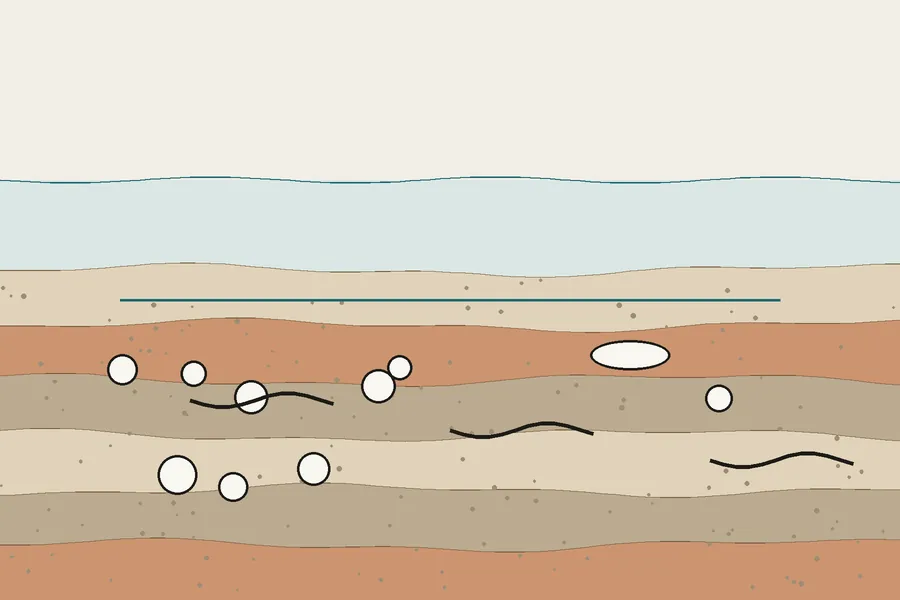
Abiotic protocells made under vent-like conditions look like early microfossils and even get labeled bacterial or archaeal by an FTIR index.
In plain words
Claims of the oldest fossils rest on shape and chemistry thought to be unique to life. This team made simple protocells from basic organic molecules in warm, alkaline, silica-rich water like a hydrothermal setting. They formed spheres, threads and lens shapes that look like supposed Archaean microfossils. Their infrared spectra overlapped with real microbes, and a common index even sorted them into bacteria, archaea or eukaryotes. The authors argue current fossil tests can be fooled.
Technical detail
(abstract only) Low-temperature alkaline hydrothermal synthesis with silica; FTIR spectra overlap; R3/2 ratio classifies eight protocell systems as bacterial, archaeal or eukaryotic. Preprint, not peer reviewed.
What we take from it
Background
Strengthens our rule for #22: any life-detection metric needs abiotic look-alike controls, not just meteorites.
Source checked against its DOI. Read the original.