Paper · 28 Oct 2026
Comets probably did not deliver concentrated cyanide to early Earth
Anslow, McDonald, Bonsor, Rimmer et al. · Scientific Reports
In a sentence
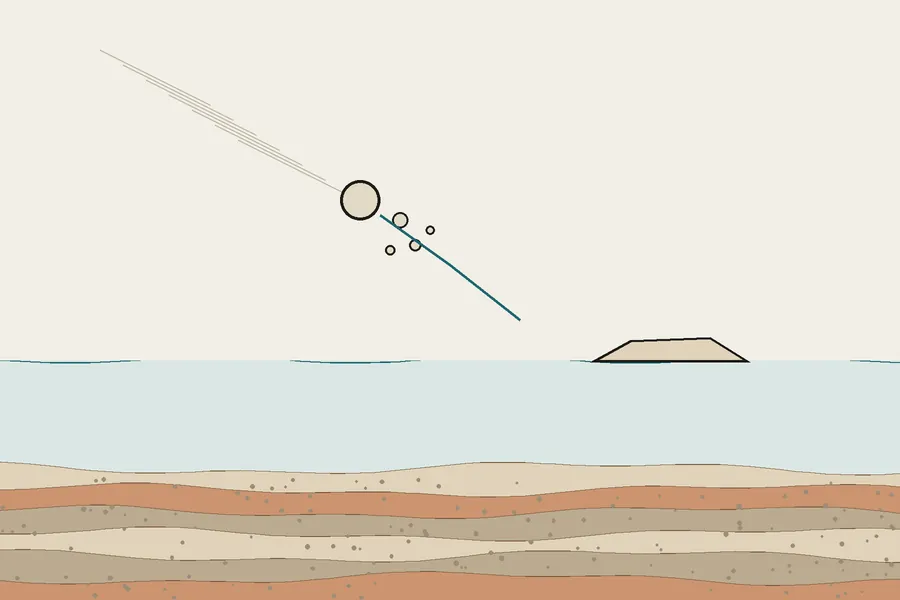
Best-case simulations give a median of zero comet impacts that left 10 mM HCN on land.
In plain words
Many origin-of-life recipes start with concentrated hydrogen cyanide, and comets carry a lot of it, so comets are often named as the supplier. This study simulated early Earth's comet bombardment a hundred thousand times, letting comets break up in the air, heat up on impact and land only on the little dry land there was. In most runs, not a single comet left enough cyanide in one place. Mars, with a thin atmosphere and slower impacts, would have done far better.
Technical detail
10^5 Monte Carlo runs; median successful (>10 mM HCN on land) impacts = 0; 54% of runs had none; most likely timing 4.41 (+0.11/-0.29) Gya; fewer than 5% of runs had a success after 4.03 Gya. Without land limits: Mars 744 ± 27, Earth 87 ± 9, Venus 24 ± 5. All poorly known inputs were set to favour delivery. Caveats: HCN survival model ignores strength and porosity; long-period comets excluded; other feedstocks assumed to be worse.
What we take from it
Background
Removes or downgrades cometary HCN as a feedstock source in the pond and cyanosulfidic step tables (#5/#17/#20); local feedstock must come from atmospheric or crustal sources instead.
Source checked against its DOI. Read the original.